Table of Contents
Car Battery: Symptoms, Testing and Replacement
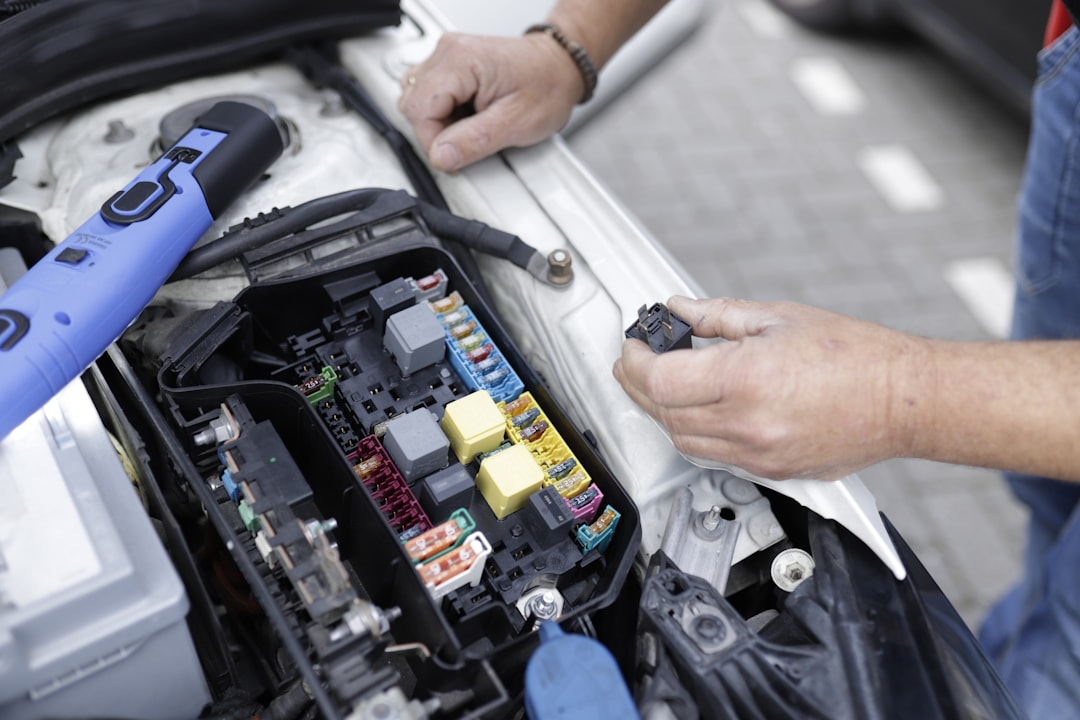
Your battery is the starting point for every electrical function in your vehicle. A healthy battery delivers 12.6V when fully charged at rest. Anything below 12.4V indicates a partial discharge; below 12.0V is a failing battery that needs immediate attention.
Signs Your Battery Is Failing
- 7 most common bad car battery symptoms — slow cranking on startup, dim headlights, electrical components acting erratically, the battery warning light, swollen battery case, old age (over 3-5 years), and a rotten egg smell from overcharging.
- Bad cell in car battery symptoms — A battery with a dead cell will not hold a full charge regardless of how long you charge it. Symptoms include not starting after sitting overnight even if it starts fine when jumped, and voltage that reads low after a full charge.
- Can a weak battery cause rough running? — Yes. A weak battery stresses the alternator, which affects voltage to injectors, sensors, and the ECU, causing misfires and rough idle that mimics other problems.
- Does a car battery drain faster in cold weather? — Significantly. A battery at 0 degrees F has only about 40% of its rated capacity. This is why batteries that seem fine in summer fail in the first cold snap of winter.
- Will the anti-theft light drain your battery? — The indicator light itself uses minimal power, but a malfunctioning anti-theft system can cause parasitic drain that kills the battery overnight.
Battery Installation and Compatibility
- What happens if you put the wrong size battery in your car? — A battery with insufficient CCA will not start the engine reliably in cold weather. Always match the group size and CCA rating in your owner manual.
- Is a car battery AC or DC? — DC (direct current), always. All 12V car batteries store and deliver DC power.
Alternator: The Battery Lifeline
The alternator charges the battery while the engine runs and powers all electrical systems. A failing alternator means your battery is running on reserve power and eventually even a new battery will go flat.
- Bad car alternator symptoms — Battery warning light on, dim or flickering lights that get worse at idle, accessories running slowly, a burning rubber smell from a slipping belt, or a grinding noise from the alternator bearing.
- Can you jumpstart a car with a bad alternator? — Yes, but only temporarily. Without a functioning alternator, the car will die again within 15-30 minutes. Head straight to a mechanic.
- Is a higher amp alternator better? — Only if you have added high-draw accessories. For a stock vehicle, the factory alternator is appropriately sized.
Transmission: Automatic Shifting Problems Explained
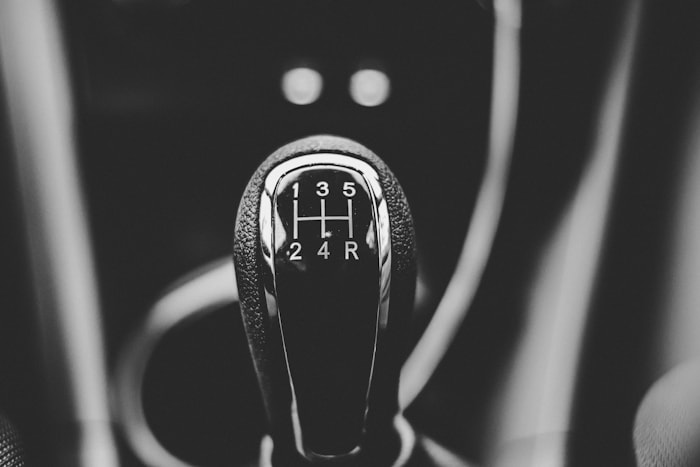
Modern automatic transmissions are complex hydraulic and electronic systems. Catching problems early saves thousands of dollars in repair costs.
- Why is my automatic transmission jerking? — The 6 main causes: low or dirty transmission fluid, a failing torque converter, worn solenoids, a slipping clutch pack, a clogged valve body, or throttle position sensor problems.
- Bad transmission mount symptoms — A clunk when shifting between D and R, vibration at idle, and the transmission visibly moving under the hood when accelerating hard.
- Bad transmission ground symptoms — An often-overlooked cause. A corroded ground strap causes erratic shifting, harsh engagement, and false fault codes. Check grounds before replacing expensive solenoids.
- Can you push-start an automatic car? — No. Automatic transmissions use a hydraulic torque converter that requires the engine running to build pressure.
- AX4S vs AX4N transmission — Both are Ford 4-speed automatics. The AX4N is the updated version with improved electronics and a better torque converter.
- How long does a transmission flush take? — A professional flush takes 30-45 minutes. Most manufacturers recommend a flush every 30,000-60,000 miles.
ABS and Wheel Speed Sensors
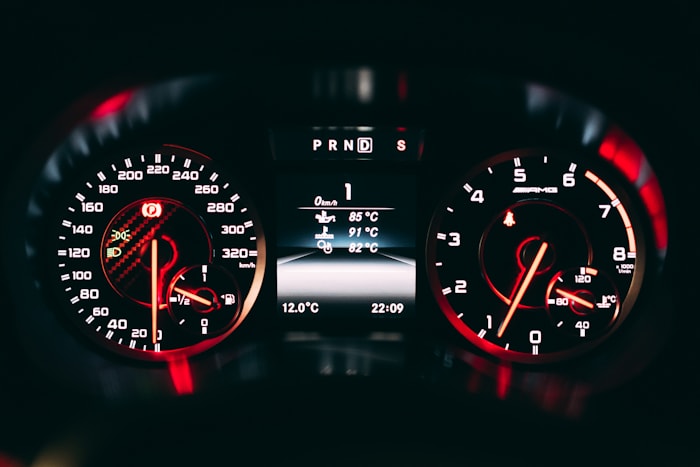
The ABS relies on wheel speed sensors at each corner to detect wheel lockup. When a sensor fails, the ABS module disables the system, illuminating the ABS warning light. Your brakes still work, but you lose anti-lock protection in emergency stops.
- What can a faulty ABS sensor cause? — ABS warning light, traction control light, and sometimes the stability control light. In severe cases it affects the speedometer and cruise control.
- How to tell which ABS sensor is bad — Use an OBD-II scanner to read the specific fault code. Without a scanner, a multimeter check of sensor resistance (1,000-2,500 ohms) narrows it down.
- Can a bad ABS sensor cause vibration? — Indirectly. If the ABS module activates ABS during normal braking due to a faulty signal, you will feel the characteristic ABS pulsation even when you do not want it.
- Can an ABS sensor cause transmission problems? — Yes. Many automatic transmissions use wheel speed sensor data for shift timing. A faulty sensor feeding incorrect data can cause erratic or harsh shifting.
- 5 bad wheel speed sensor symptoms — ABS light on, traction control disabled, speedometer errors, rough automatic shifting, and on AWD vehicles, engagement problems with the transfer case.
- Common failing speed sensor symptoms — Harsh or delayed shifts, incorrect gear display, and transmission fault codes.
- Can a bad speed sensor cause stalling? — Yes. A bad signal can cause stalling at stops as the car decelerates and the torque converter tries to unlock.
- Can you drive with a bad wheel speed sensor? — Technically yes, but ABS and traction control are disabled. Replace it as soon as possible.
- How does a speed sensor work? — Most modern sensors are Hall-effect type: a magnetic pickup reads a toothed reluctor ring as the wheel turns, generating a pulse signal the ABS module uses to calculate wheel speed.
Spark Plugs and Ignition System
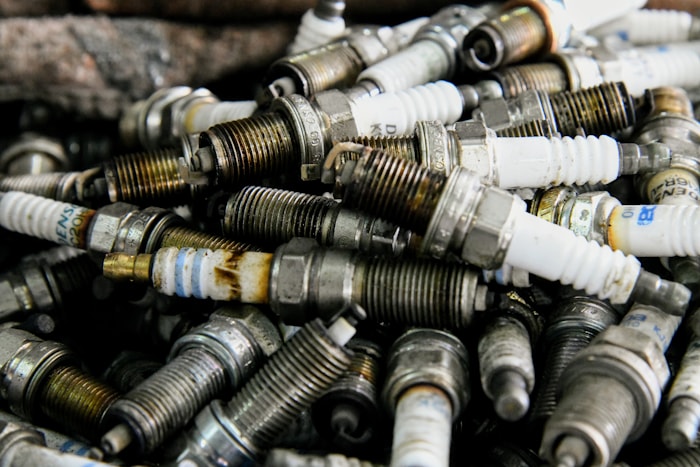
Spark plugs initiate combustion in every cylinder on every power stroke. A misfiring cylinder wastes fuel, increases emissions, and stresses the catalytic converter. On modern engines with individual coil-on-plug ignition, a single bad ignition coil affects exactly one cylinder with a specific P030X fault code.
- Bad ignition coil symptoms — Rough idle with a consistent misfire, loss of power on acceleration, poor fuel economy, and black smoke from the exhaust.
- Why do spark plugs go bad? — Normal wear widens the electrode gap. Oil contamination, carbon fouling from rich running, and coolant contamination from a head gasket leak all accelerate failure.
- Oil on spark plugs — Classic sign of valve stem seal or piston ring wear. Fix the oil leak before replacing plugs or the new ones will foul quickly.
- Oil fouled spark plugs — When plugs are saturated with oil, they cannot fire reliably. Replacement is required.
- Oil in spark plug well — Typically caused by a leaking valve cover gasket. Replace the gasket and plugs together.
General Electrical Troubleshooting
Automotive electrical troubleshooting follows a systematic approach: start with battery voltage and ground integrity, then check fuses, then work through relays and switches before condemning any component. Most electrical problems are either a bad ground, a blown fuse, or a failing relay.
Quick Diagnosis Reference
| Warning Light | Most Likely System | Drive or Stop? |
|---|---|---|
| Battery light | Alternator or charging circuit | Drive to nearest shop immediately |
| ABS light only | Wheel speed sensor or ABS module | Drive carefully, brakes still work |
| Check engine + misfire feel | Ignition coil or spark plug | Drive gently, avoid highway |
| Transmission temp light | Low fluid or cooling issue | Stop and check fluid level |
| Check engine steady | Various, read the code | Drive, but get code read soon |
| Check engine flashing | Active misfire damaging catalyst | Stop driving, tow it |
Understanding your car warning systems turns a panic moment into a manageable situation. Bookmark this guide and use it as your first reference whenever a warning light appears.

Hi there! I’m Naomi O’Colman. I’ve got years of experience working at an auto repair shop here in Texas under my belt. On top of that, ever since I was a kid I’ve been passionate about the auto industry. Since I’ve joined the team at automotivegearz.com I’ve been enthusiastically sharing my passion and insights with my readers. I’m dedicated to delivering high quality content and helping you stay up to date with the latest automotive trends and products out there!